What Is Mindfulness? Benefits, Uses, and How to Start
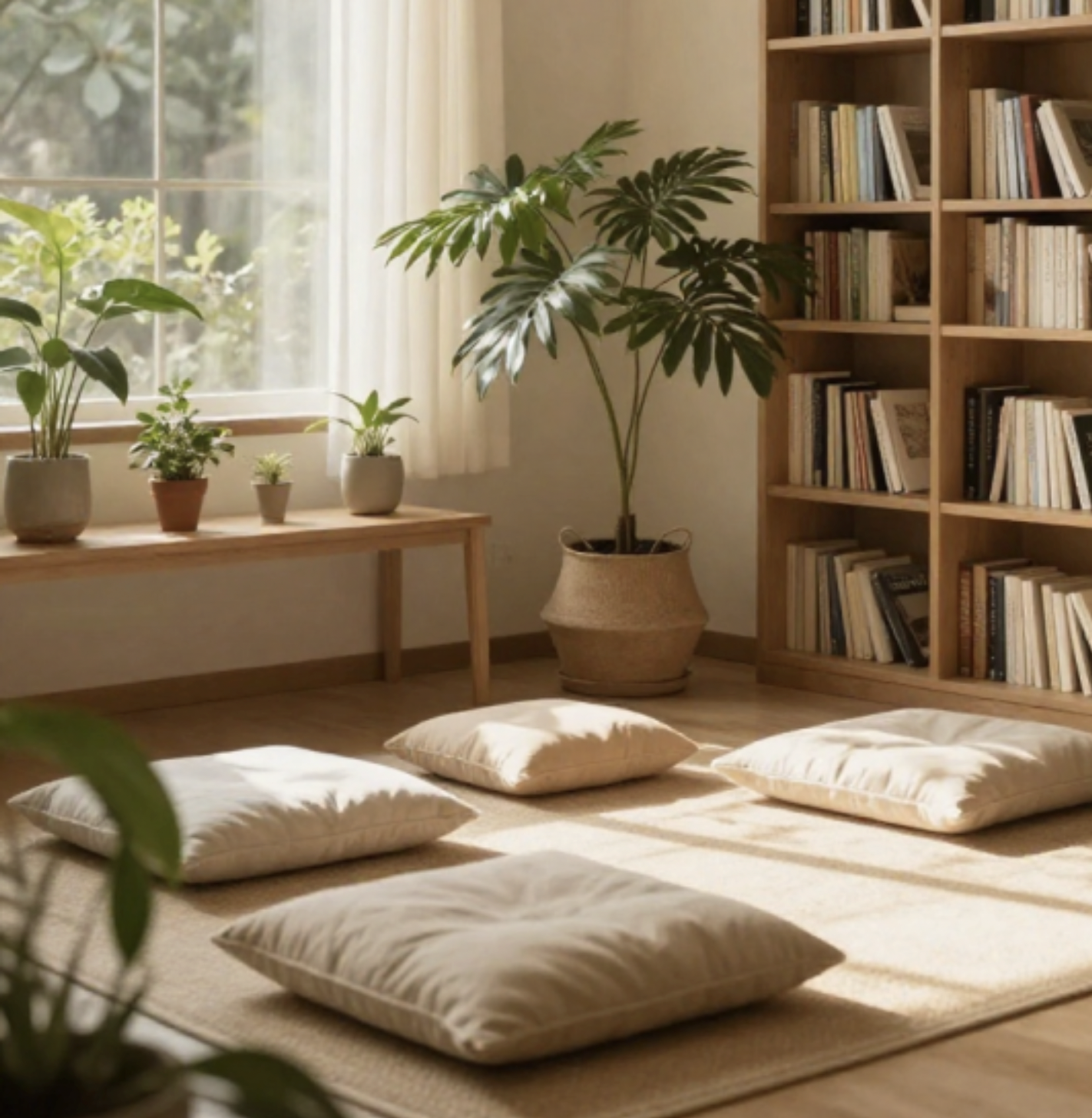
Mindfulness gets mentioned everywhere — in therapy, at work, on wellness apps, in casual conversation. But the word is used so often that it can start to feel vague. What does it actually mean to "be mindful"? And does it really help, or is it just another wellness trend?
Here's a plain-language guide to what mindfulness is, what it can do, and why so many of us find it harder to practice than it sounds.
What Is Mindfulness?
At its core, mindfulness is the practice of paying attention to the present moment, on purpose, without judging what you notice. That's it. No special equipment, no belief system required.
It can look like noticing your breath while you wait in line. It can look like actually tasting your food instead of eating on autopilot. It can look like sitting quietly for an hour, simply observing your thoughts as they come and go, without getting pulled into every one of them.
Mindfulness isn't about clearing your mind or feeling calm all the time. Thoughts will still show up — the goal isn't to stop them, but to notice them without getting swept away.
The Benefits of Practicing Mindfulness
Mindfulness has been studied extensively over the past few decades, and the overall evidence is genuinely supportive. Across dozens of studies, mindfulness-based programs have been shown to reduce stress, anxiety, and depression in healthy adults, along with improvements in emotional regulation, resilience, sleep quality, and even blood pressure.
Researchers believe part of why it works is that regular practice changes how the brain responds to stress over time. It's not just a feeling of calm in the moment — with practice, it may genuinely shift how your nervous system handles daily pressure.
What Conditions Can Mindfulness Help With?
The evidence varies by condition, so it's worth a quick, honest breakdown rather than treating "mindfulness helps" as one blanket claim.
Mindfulness for Anxiety
Anxiety often pulls attention into the future — rehearsing worst-case scenarios, bracing for what might go wrong. Mindfulness trains attention back to the present, where there's usually nothing to brace against. This is one of the better-supported uses of mindfulness, with consistent evidence for reduced anxiety symptoms.
Mindfulness and Depression
Mindfulness has been studied mainly as a way to help prevent depression from returning once someone has already recovered. For people who've dealt with depression before, a regular practice can be a meaningful part of staying well.
Mindfulness for ADHD
Mindfulness isn't a replacement for ADHD treatment, but research suggests it can be a helpful addition. Regular practice has been linked to improved attention and concentration in both children and adults with ADHD, likely by strengthening the same attention networks ADHD affects. Evidence for reducing hyperactivity and impulsivity specifically is less consistent.
Mindfulness for Chronic Pain and Substance Use
Mindfulness-based programs adapted for these areas have shown moderate, meaningful benefits — generally by changing a person's relationship to pain or cravings.
Mindfulness vs. Meditation: What's the Difference?
These two words get used interchangeably, but they're not quite the same thing.
Meditation is a formal, structured practice — you set aside dedicated time, sit down, and use a specific technique (following the breath, repeating a phrase, doing a body scan) to train your attention.
Mindfulness is broader. It's a quality of attention you can bring to any moment, not just a seated practice. You can be mindful while washing dishes, walking to your car, or having a conversation.
Put simply: meditation is one way to practice mindfulness, but mindfulness itself can happen anywhere, anytime, without ever sitting down. Many people use meditation to build the skill, then carry that same quality of attention into the rest of their day.
Why Mindfulness Matters Right Now
Many of us live in a culture that prizes speed, output, and constant availability, which makes stillness feel unfamiliar — even uncomfortable — at first. Mindfulness asks you to do the opposite of what that culture often rewards: to pause, on purpose, instead of filling every moment with input or output. For many people, that pause becomes one of the more restorative parts of their day.
How to Start a Mindfulness Practice
You don't need a retreat, an app subscription, or a perfectly quiet room to begin. A few starting points that hold up well across most approaches:
Start smaller than feels worthwhile. A single minute of paying attention to your breath counts. Consistency matters more than duration, especially at the beginning.
Pick an anchor. Most practices use something to return to when your attention drifts — usually the breath, but sounds or physical sensation work too.
Expect your mind to wander, and don't treat it as failure. Noticing the wandering, without judging yourself for it, is the practice.
Attach it to something you already do. Brushing your teeth or waiting for coffee to brew are natural moments to practice without carving out extra time.
Consider practicing with other people. A set time and a shared space — even in silence — make it far easier to actually follow through.
Practicing Mindfulness Doesn't Have to Be a Solo Effort
Knowing the benefits of mindfulness and actually building a consistent practice are two different things. Most people find it hard to sustain on their own — it's easy to mean to sit down and breathe for ten minutes and never quite get there.
That's part of why practicing in community can help. Having a set time, a shared space, and other people around you — even in silence — can make the difference between an intention and an actual habit.
If you're looking for a place to start, starting in July 2026, Stephanie Otte, LPC, will provide host a free, silent mindfulness group every Friday evening from 5:30–6:30 PM — no registration, no experience needed. Drop in for five minutes or stay the full hour, and come practice alongside others who are working on it too.